Showing posts tagged "commercial wifi" (12 found)
Clear filter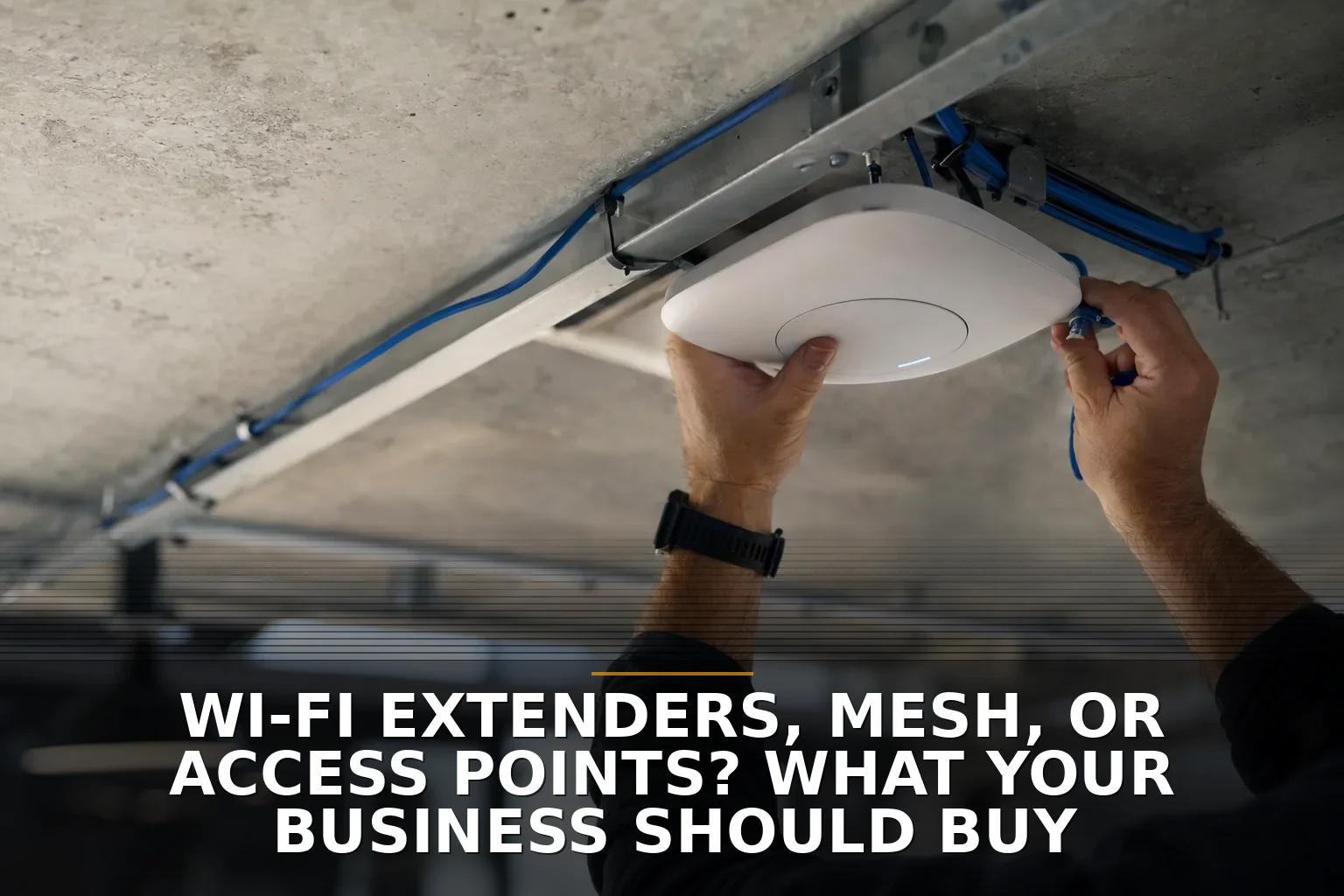
Wi-Fi extenders, mesh, or access points? What your business should buy
Wired access points are the right buy for most businesses, mesh is the fallback, and extenders are rarely the answer. This straight-talk guide helps business owners choose the right Wi-Fi fix for dead zones, shops, offices, and multi-building properties.
What It Costs to Fix Dead Wi-Fi Zones in a Commercial Building
Fixing dead Wi-Fi zones in a commercial building usually costs $1,500 to $15,000+, with most businesses landing around $3,000 to $8,000. This breakdown explains what drives the price, where cheap fixes backfire, and which ongoing costs owners forget.
Shared Internet Across Buildings: Wireless Bridge or Second Service Line?
If both buildings can clearly see each other, a wireless bridge is usually the better buy; if you need true independence or can’t mount equipment reliably, get a second service line. This guide helps business owners choose based on sight lines, network needs, downtime risk, and property constraints.
Get posts like these in your inbox
Join the early readers of Thought Box. No spam, unsubscribe anytime.
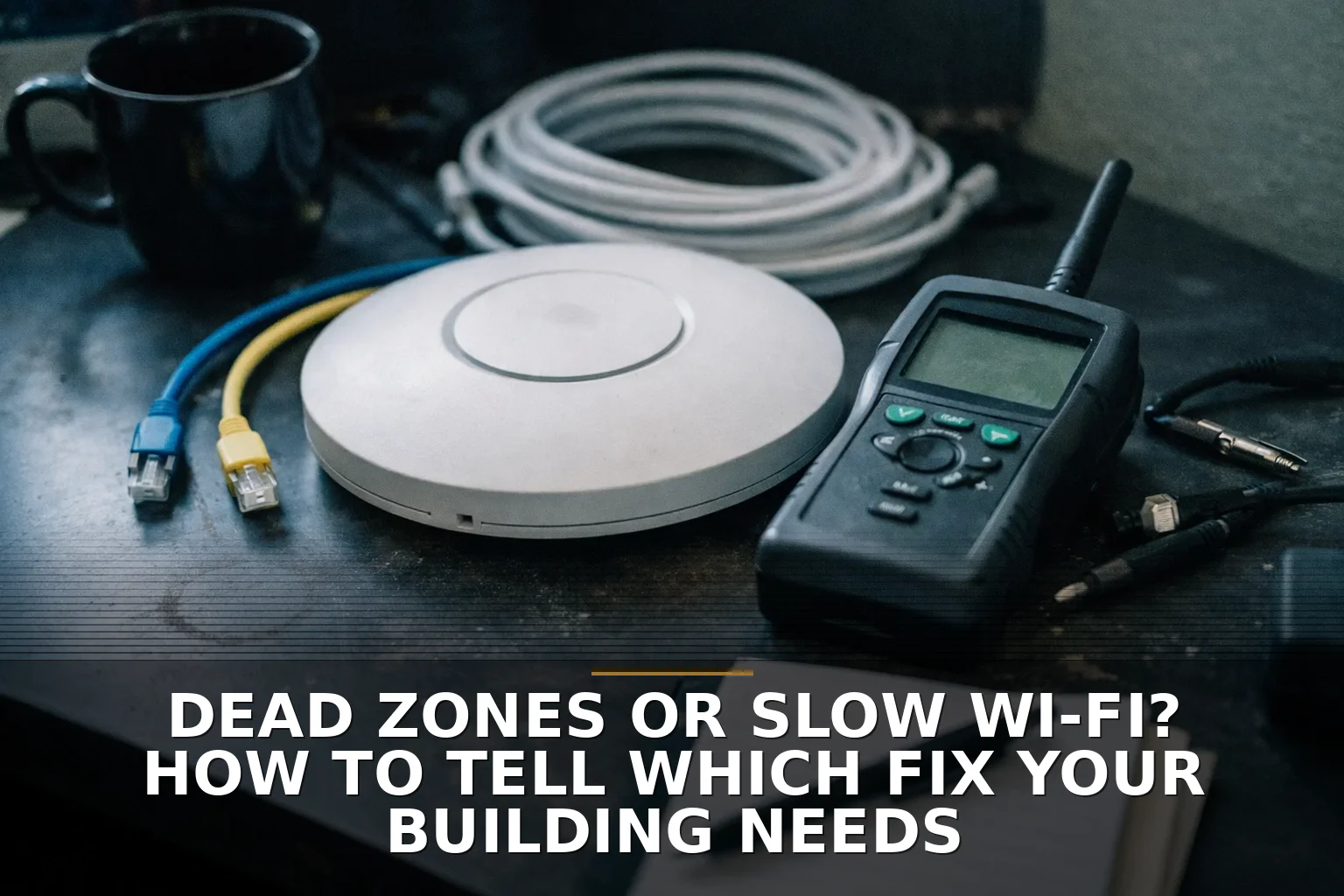
Dead zones or slow Wi-Fi? How to tell which fix your building needs
Dead zones need a coverage fix; slow Wi-Fi with decent signal needs a performance fix. This guide helps business and property owners tell whether they need better access point placement, cabling, or a true Wi-Fi upgrade.
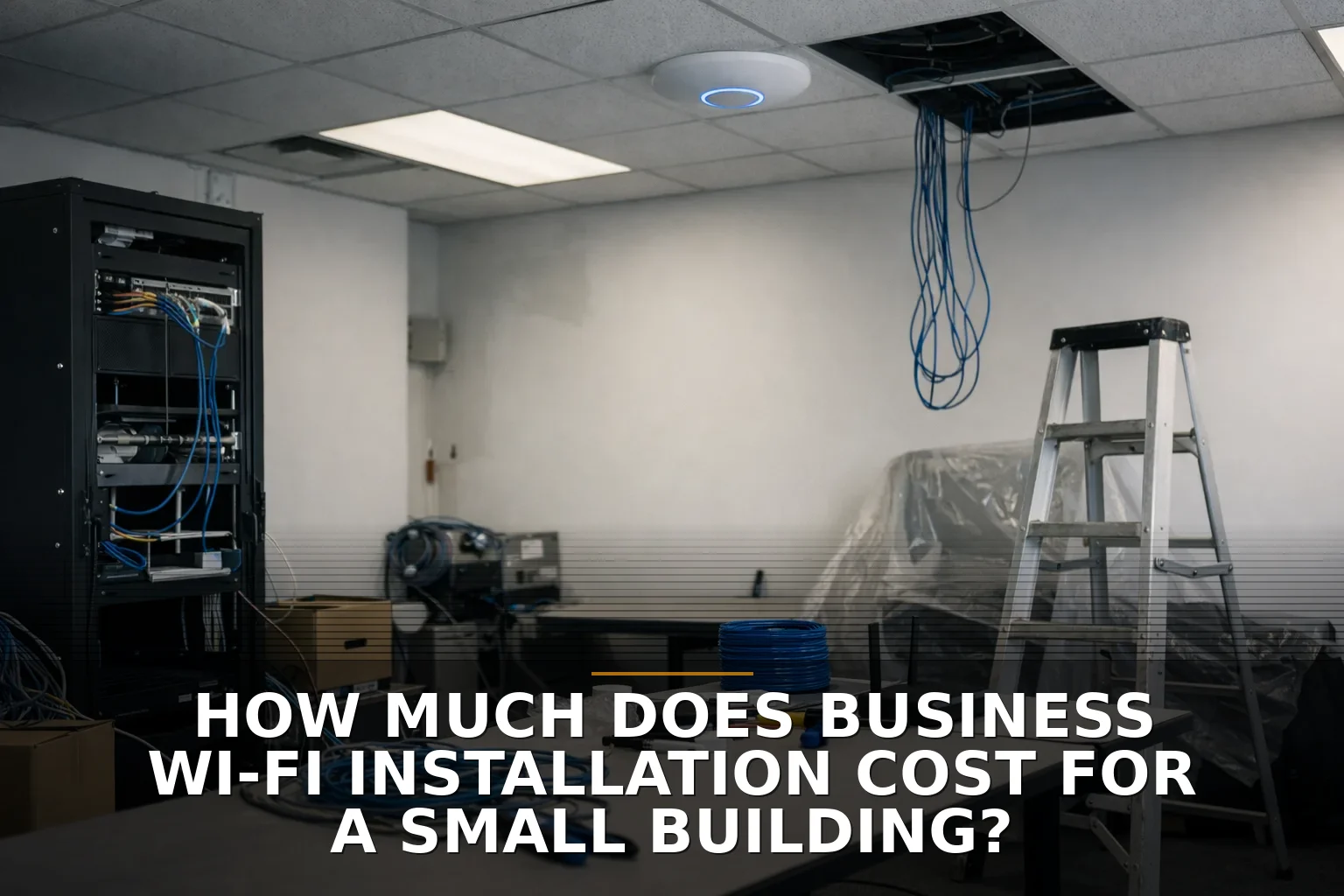
How Much Does Business Wi-Fi Installation Cost for a Small Building?
Business Wi-Fi installation for a small building usually costs $1,500 to $8,000, with most small businesses landing around $2,500 to $5,500. This breakdown explains what drives the price, where cheap installs get expensive, and the ongoing costs owners forget.
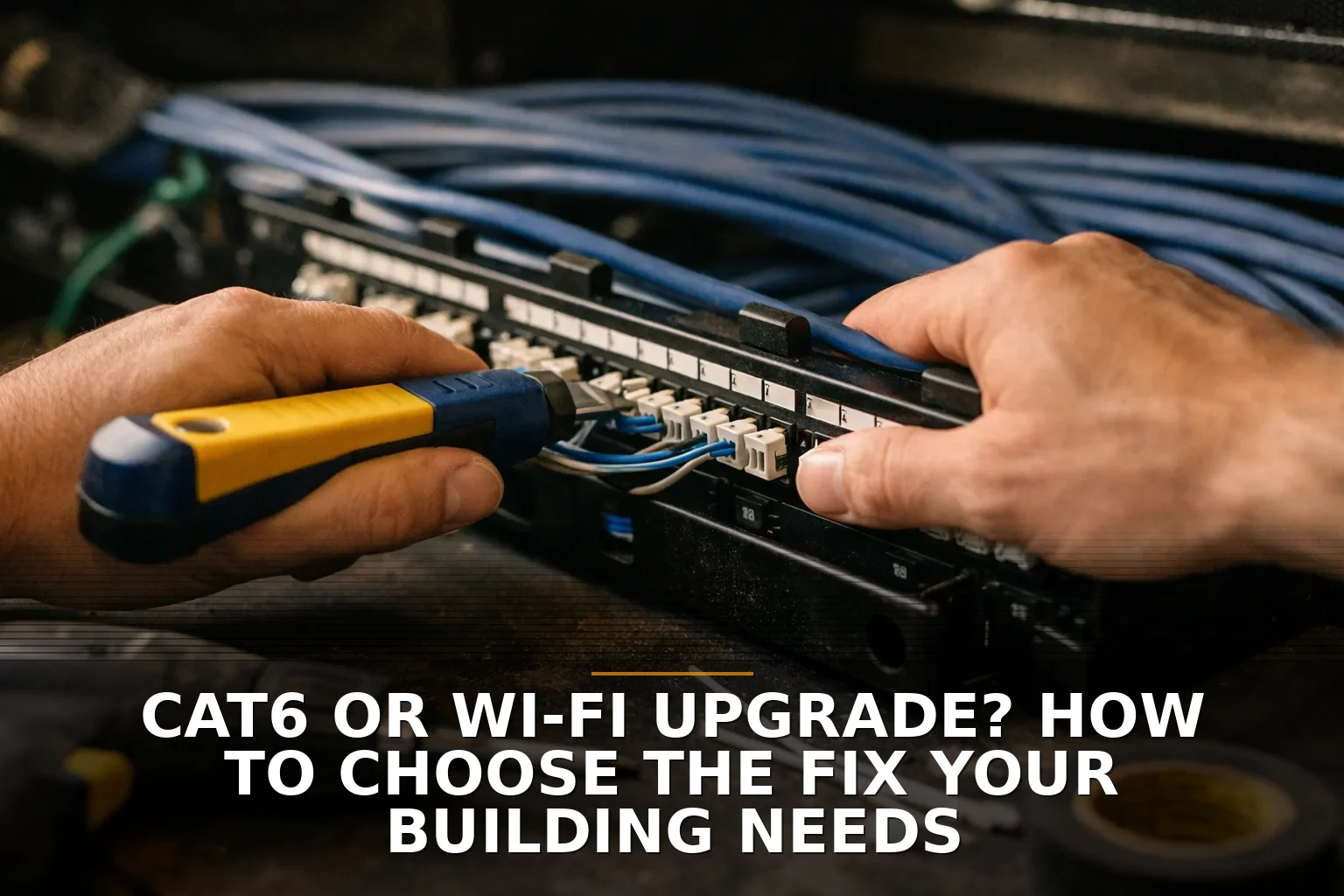
Cat6 or Wi-Fi upgrade? How to choose the fix your building needs
Bad Wi-Fi doesn’t always mean you need new access points. Business owners should choose cabling first when the wired backbone, fixed devices, or PoE needs are the bottleneck, and choose Wi-Fi upgrades when coverage and capacity are the real issue.
Get posts like these in your inbox
Join the early readers of Thought Box. No spam, unsubscribe anytime.
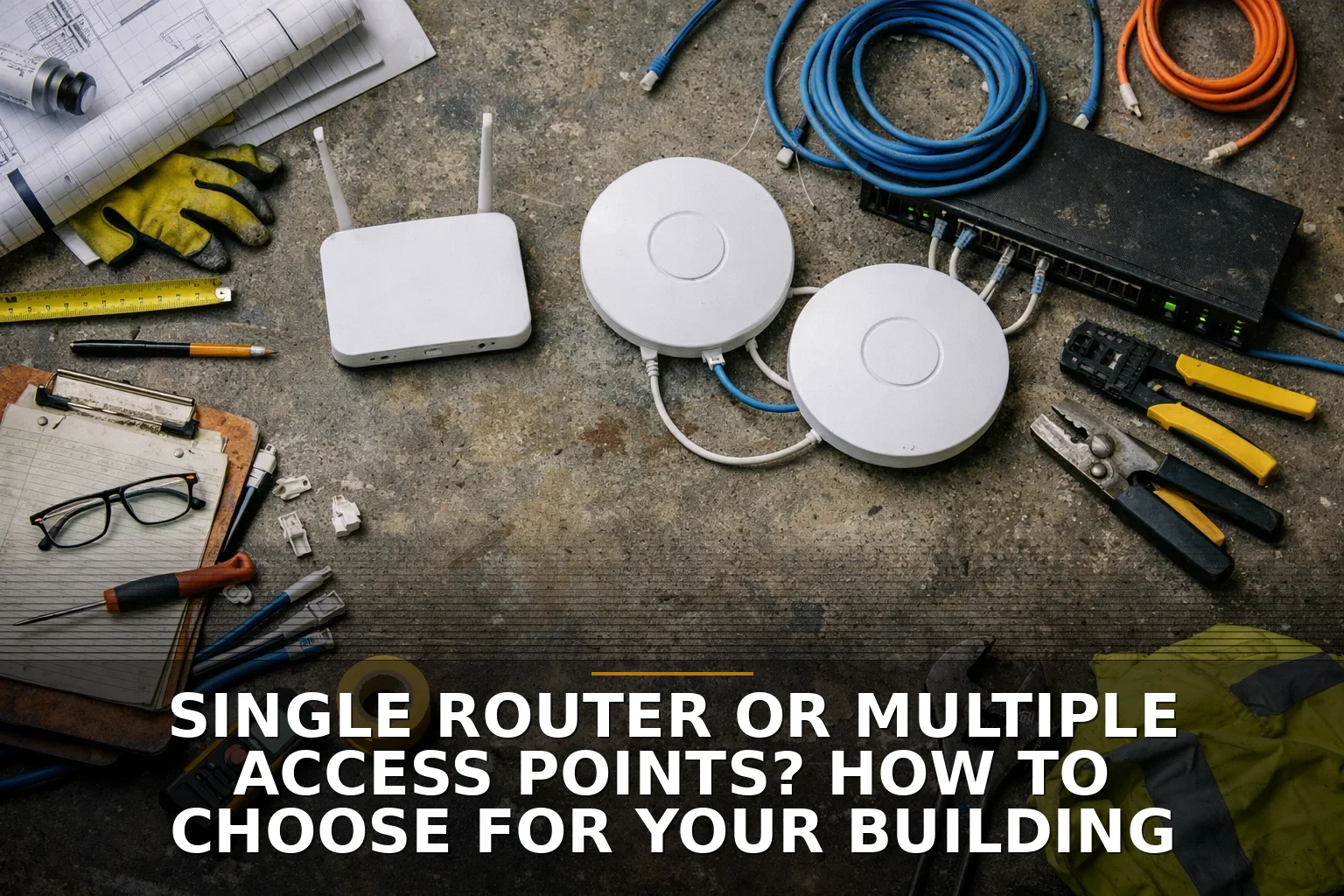
Single Router or Multiple Access Points? How to Choose for Your Building
Choose multiple wired access points for most larger or more complicated buildings; use a single router only in small, open spaces with light demand. This guide helps business owners decide based on layout, capacity, backhaul, and building materials.
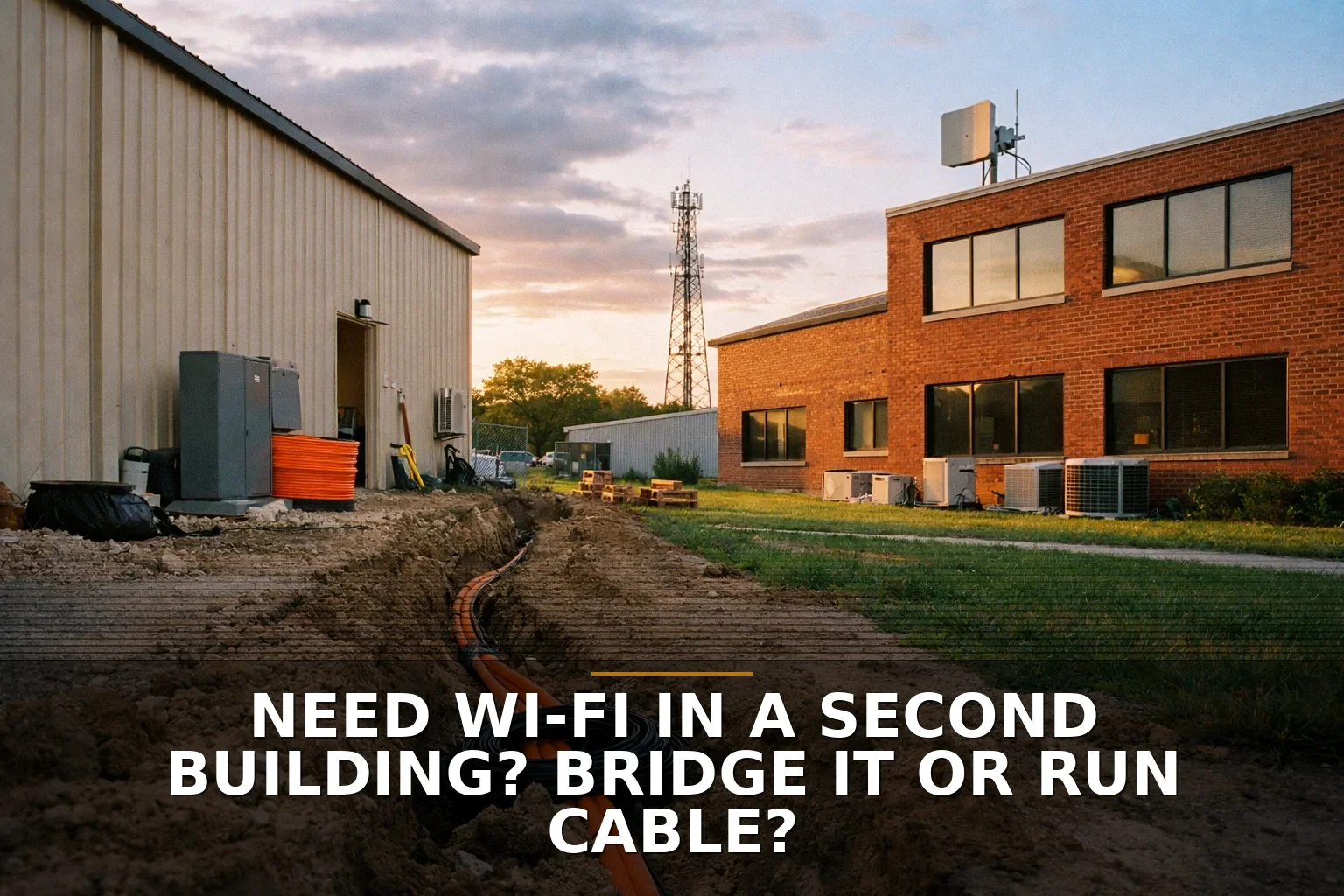
Need Wi-Fi in a Second Building? Bridge It or Run Cable?
Run fiber if trenching is reasonable; use a wireless bridge if it isn’t. This guide helps business and property owners decide based on trenching difficulty, line of sight, reliability, and the real risks of copper between separate buildings.
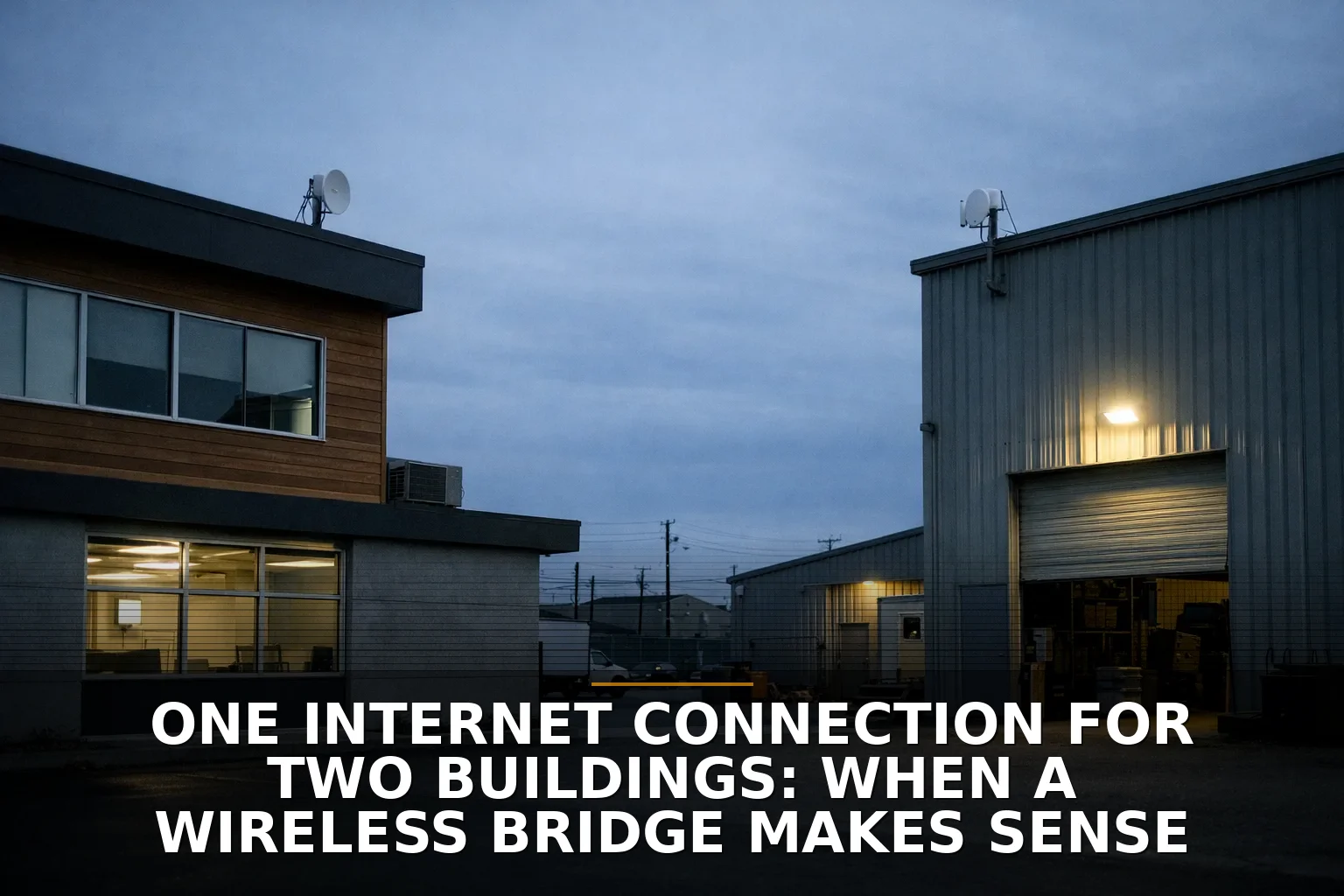
One internet connection for two buildings: when a wireless bridge makes sense
A wireless bridge makes sense when two buildings are part of the same business, have clear line of sight, and trenching fiber is harder than the problem deserves. This guide helps business owners decide when to use a bridge, when to run fiber, and when not to share one connection at all.