Showing posts tagged "building connectivity" (4 found)
Clear filter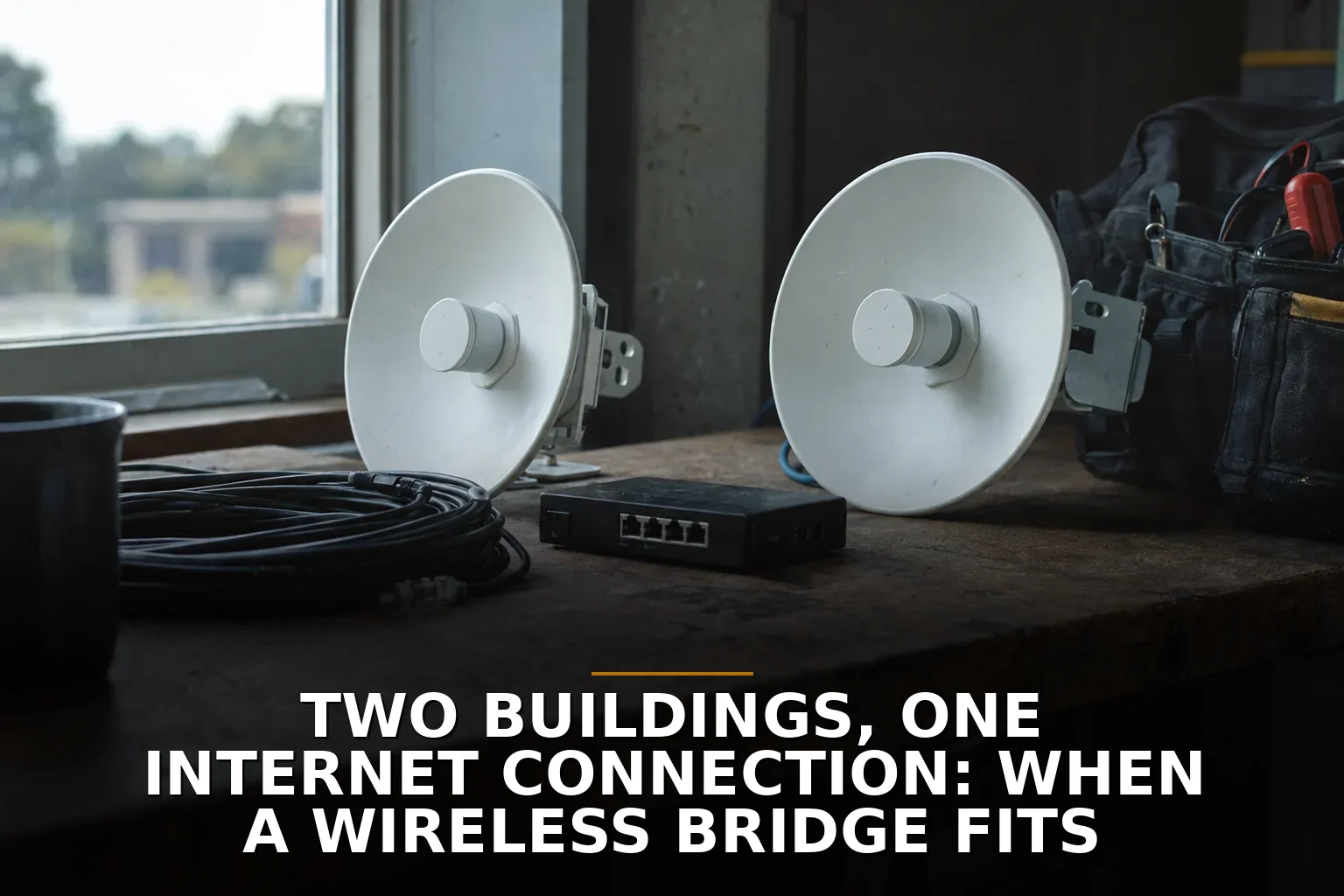
Two Buildings, One Internet Connection: When a Wireless Bridge Fits
A wireless bridge is usually the right choice when two buildings have clear line of sight and trenching or a second service line would be overkill. This guide helps business owners decide when to bridge, when to run cable, and when to bring in a pro.
Shared Internet Across Buildings: Wireless Bridge or Second Service Line?
If both buildings can clearly see each other, a wireless bridge is usually the better buy; if you need true independence or can’t mount equipment reliably, get a second service line. This guide helps business owners choose based on sight lines, network needs, downtime risk, and property constraints.
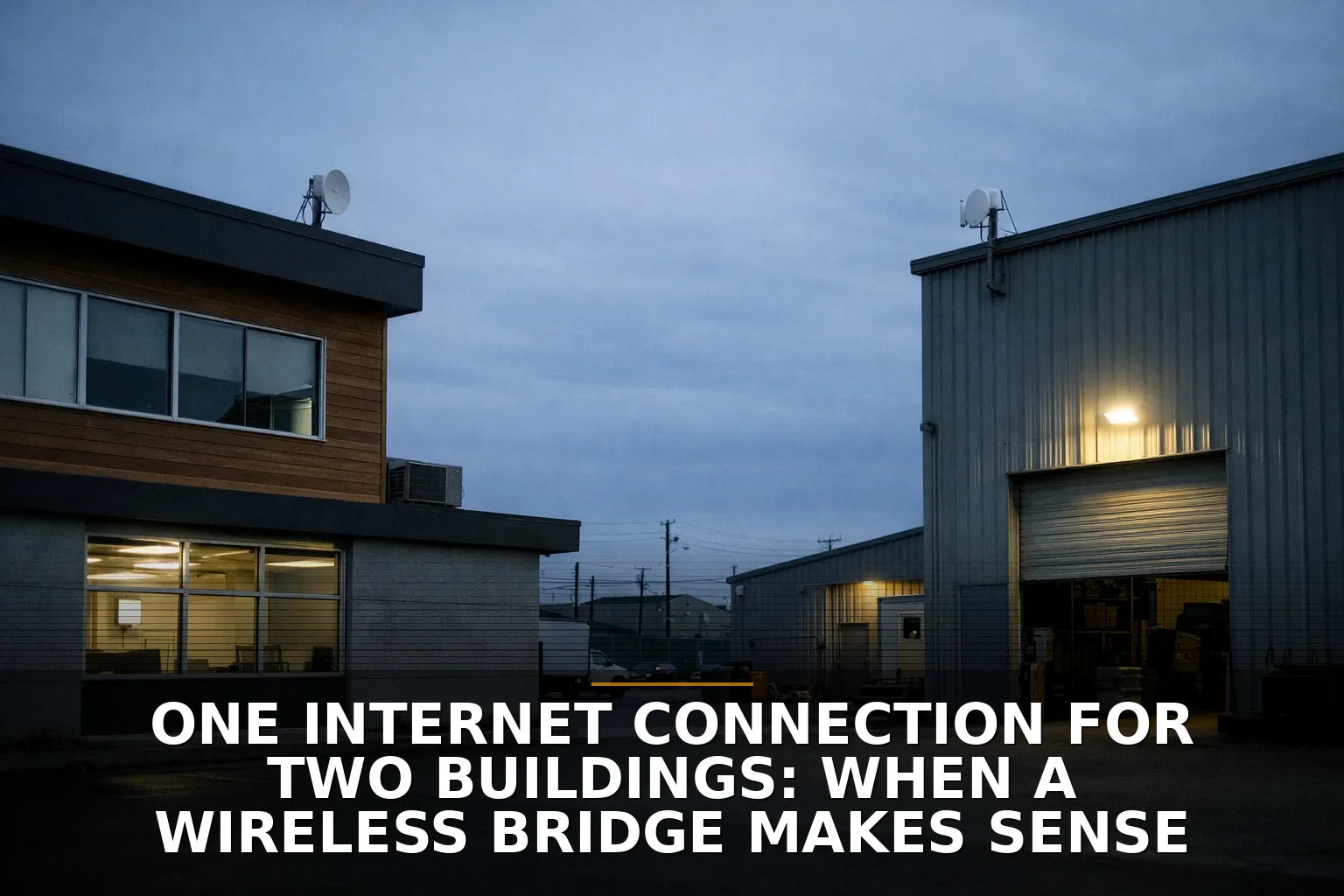
One internet connection for two buildings: when a wireless bridge makes sense
A wireless bridge makes sense when two buildings are part of the same business, have clear line of sight, and trenching fiber is harder than the problem deserves. This guide helps business owners decide when to use a bridge, when to run fiber, and when not to share one connection at all.
Get posts like these in your inbox
Join the early readers of Thought Box. No spam, unsubscribe anytime.
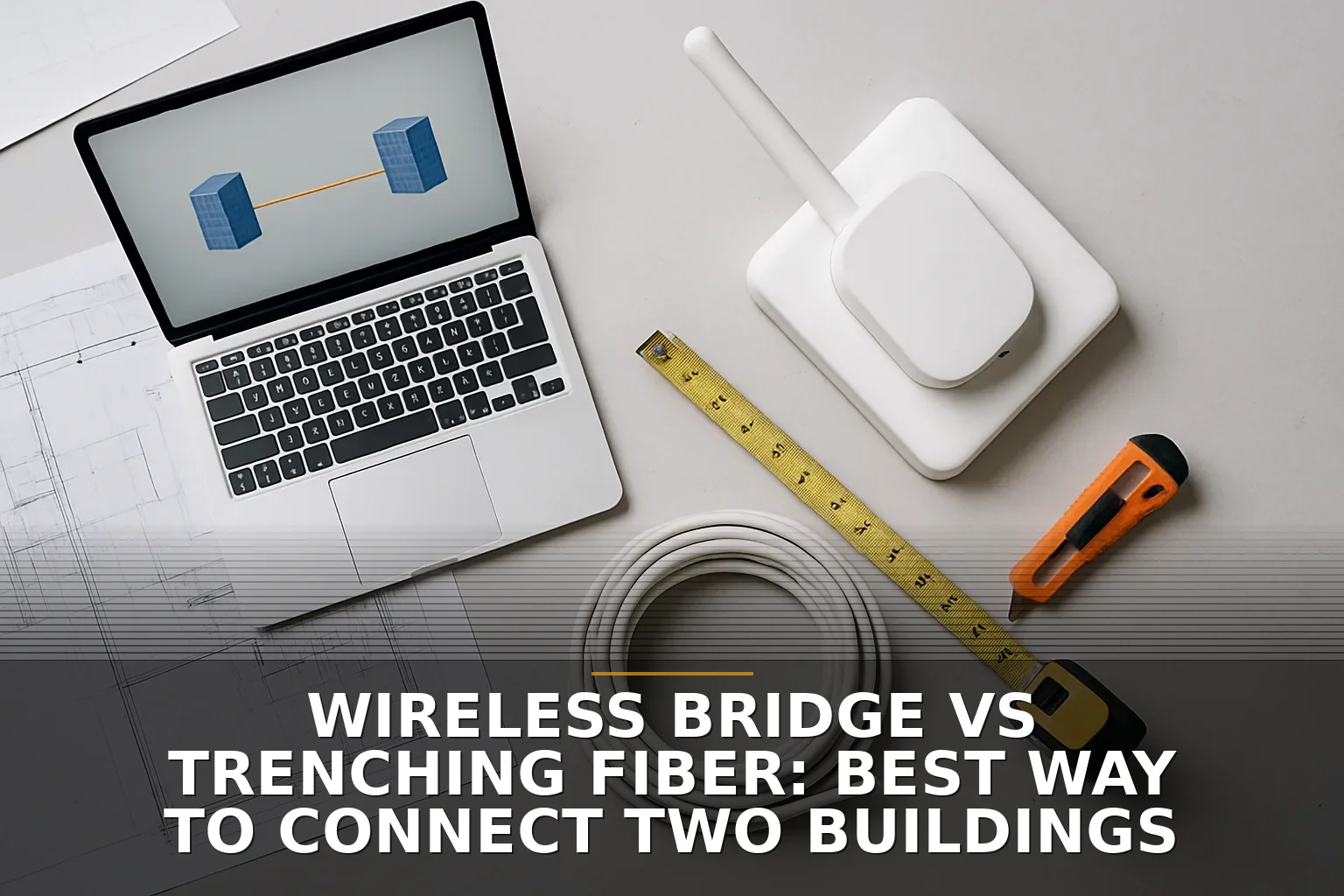
Wireless Bridge vs Trenching Fiber: Best Way to Connect Two Buildings
Trench fiber is usually the best long-term way to connect two buildings; a wireless bridge is the better choice when you need a fast, lower-cost link with clear line of sight. This guide breaks down cost, reliability, code issues, and when each option actually makes sense for a business owner.