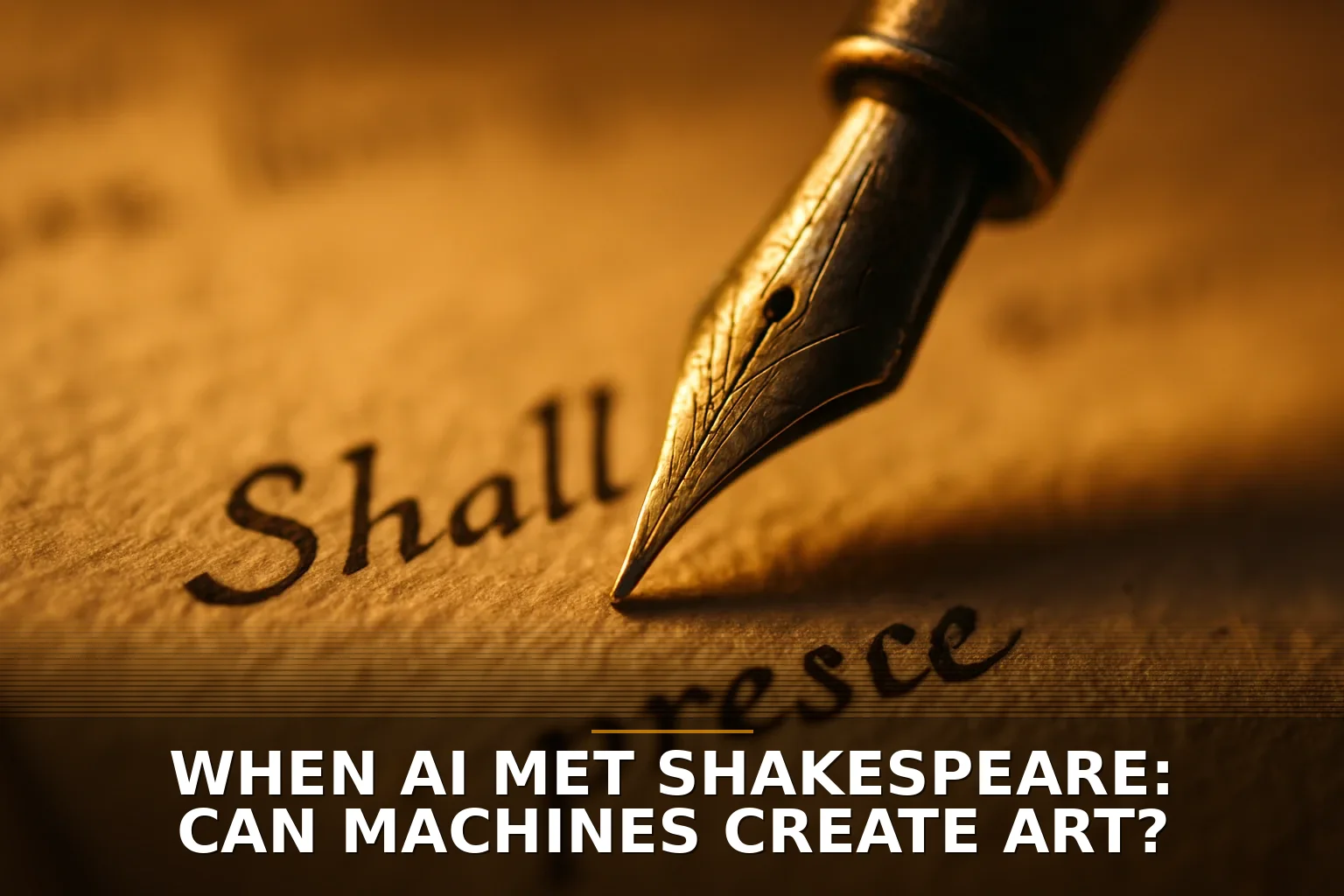
When OpenAI's GPT-3 casually penned a Shakespearean sonnet, the internet collectively gasped. "Could a machine really create art?" everyone wondered. The consensus? Machines are just overgrown calculators, crunching data with zero creativity. But here's the plot twist: that view might be as outdated as teaching Hamlet with sock puppets.
Let's start with what defines art. Traditionally, it's seen as an expression of human emotion, intention, and soul. AI skeptics argue that without feelings, machines can only mimic art, not create it. Yet, this binary thinking misses a crucial detail. AI isn't about replacing the artist; it's about expanding the palette.
To illustrate, consider how AI was used to analyze centuries of classical music and then compose a symphony. The result? A piece that critics couldn't distinguish from Mozart. This isn't just data regurgitation—it's a collaboration between human creativity and machine efficiency. It's like having a digital apprentice that learns and evolves with your style. How Bees Are Quietly Teaching AI to Solve Complex Problems dives deeper into this symbiotic relationship.
Now, let's talk about bias and intent, two elements often highlighted in the human vs. machine debate. AI might lack personal bias, but it does what it's trained to do—sometimes better than us. Take AI's role in uncovering racial bias in policing or spotting anomalies in massive data sets. Machines can shine a light where human bias prefers shadows. The Hidden Economics of Your Data: Who's Cashing In? explores how AI is being used to reveal hidden truths in data.
Moreover, the creativity of AI is being harnessed in unexpected ways. Fashion brands are using AI to design clothes that blend cultural aesthetics from different eras, producing something entirely new. It's not just a creative tool; it's a cultural bridge. Much like The Surprising Link Between Origami and Space Exploration, AI is drawing connections that humans might overlook.
Critics say, "But AI can't feel!" True, but not the whole story. Art doesn't always originate from emotion; sometimes it's born from exploration and the synthesis of new ideas. AI's lack of emotion can actually be an advantage, sparking innovation free from the constraints of human sentiment.
So, can machines create art? Perhaps that's the wrong question. Instead, ask how AI can augment human creativity, broaden perspectives, and challenge our definitions. As AI continues to evolve, it may not recite "To be, or not to be" with the existential dread of a Hamlet, but it will certainly make us rethink what it means to be an artist.
In the end, when AI meets Shakespeare, it's not about replacing quills with algorithms. It's about watching the two dance, a modern sonnet in itself.
Be the first to share your thoughts.