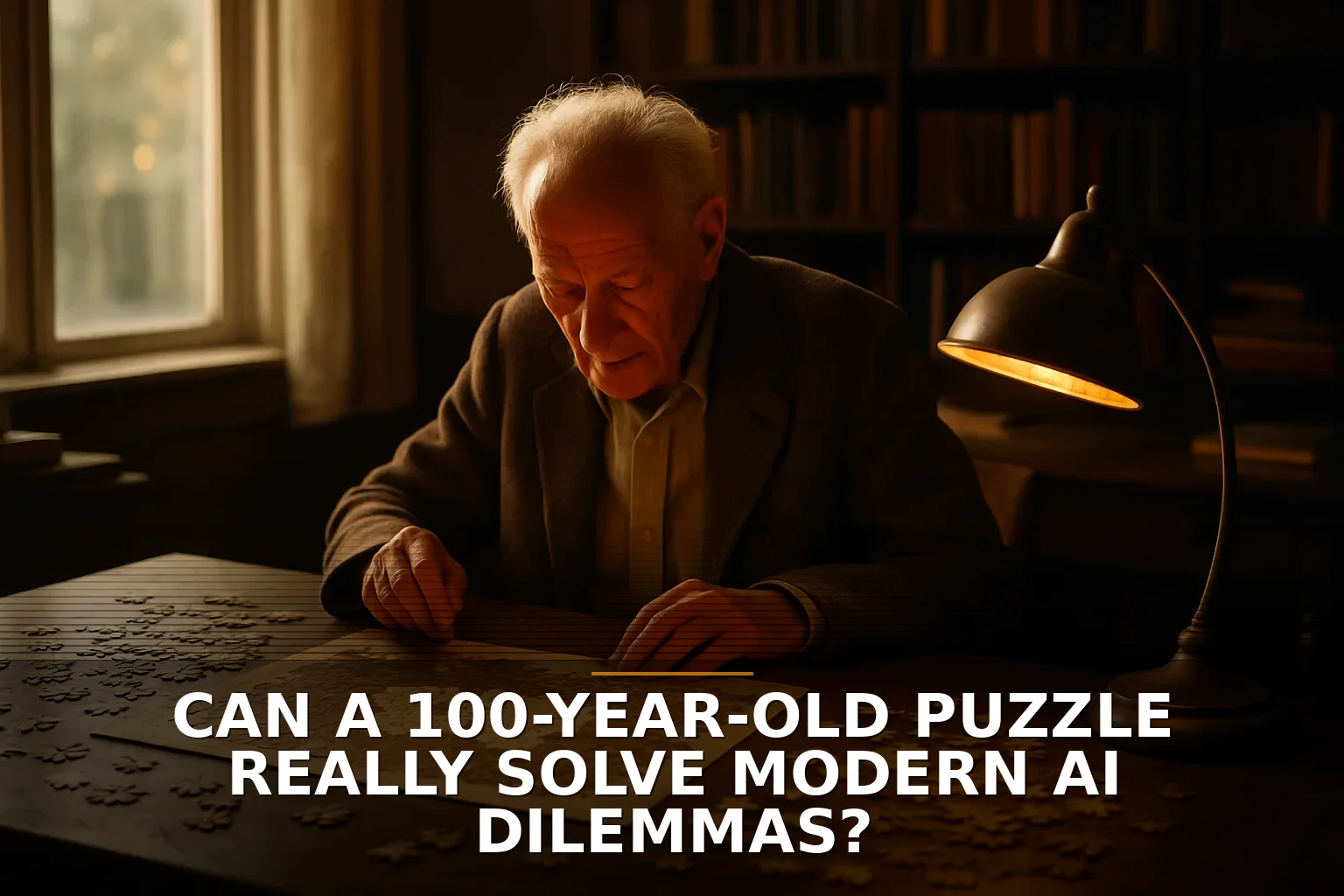
Imagine a puzzle so complex that even the best minds of the early 20th century couldn't crack it. Now picture that same puzzle offering clues to tackle the most intricate challenges of modern AI. The P vs. NP problem, a theoretical enigma in computer science, posits a simple question with profound implications: Can every problem whose solution can be quickly verified by a computer also be quickly solved by a computer?
If this question feels like it came straight out of a sci-fi plot, you're not alone. But let's consider a world where this riddle is solved, and AI suddenly gains the ability to solve these NP problems efficiently. What might that mean for us?
For starters, consider logistics. Today, companies like Sysco rely on sophisticated algorithms to optimize routes and schedules. Yet, they still face limitations because some calculations remain computationally expensive. Solving P vs. NP would mean instantaneous solutions to these logistical challenges, potentially saving billions in operational costs globally.
But it doesn't end there. Imagine the implications for cryptography. Current encryption systems rely on the difficulty of solving specific NP problems to keep data secure. If these problems become easy to solve, the entire foundation of digital security could collapse overnight. We could be forced to reconsider how we protect everything from bank accounts to personal identities in the digital realm.
Yet, there's an upside to this cryptographic chaos. Newer, more complex forms of security might emerge, pushing the boundaries of innovation in ways we can't yet imagine. Much like how bees have inspired AI swarm intelligence, we might look to nature or other unexpected sources for breakthrough solutions.
In the world of artificial intelligence, solving P vs. NP might lead to AI systems that can handle tasks we currently deem impossible. Picture AI capable of flawless real-time translations, or virtual assistants that not only understand context but anticipate needs with uncanny precision. It's the premise of a human touch that AI has yet to master.
Of course, this brings us to a dystopian possibility: automation at an unprecedented level. While increased efficiency and capability could be huge wins for productivity, the implications for employment are equally massive. Jobs that depend on the human ability to solve complex problems might become obsolete, pushing us to rethink the very nature of work.
So, what if this century-old puzzle was finally solved? Would it herald a new golden age of technology, or would it unleash a wave of challenges we aren't prepared for? The real conundrum might be in reconciling the technological leaps with the societal shifts they spark. Would we be ready for that kind of future?
What this means for your business. First-principles thinking — going back to what the problem actually is, instead of which tool to buy — is what separates custom software builds that work from ones that don't. The puzzle approach: figure out what you're really trying to optimize for, sketch the smallest thing that solves it, then build that.
Most off-the-shelf tools start in the wrong place. They start with "here's a category of software, which features do you want?" instead of "what's the actual job to be done?" When the job-to-be-done is unique to your operation — the way your scheduling actually works, the rule your billing actually follows, the report your owner actually reads — generic software always falls short. Custom doesn't, because it starts at the problem.
Be the first to share your thoughts.