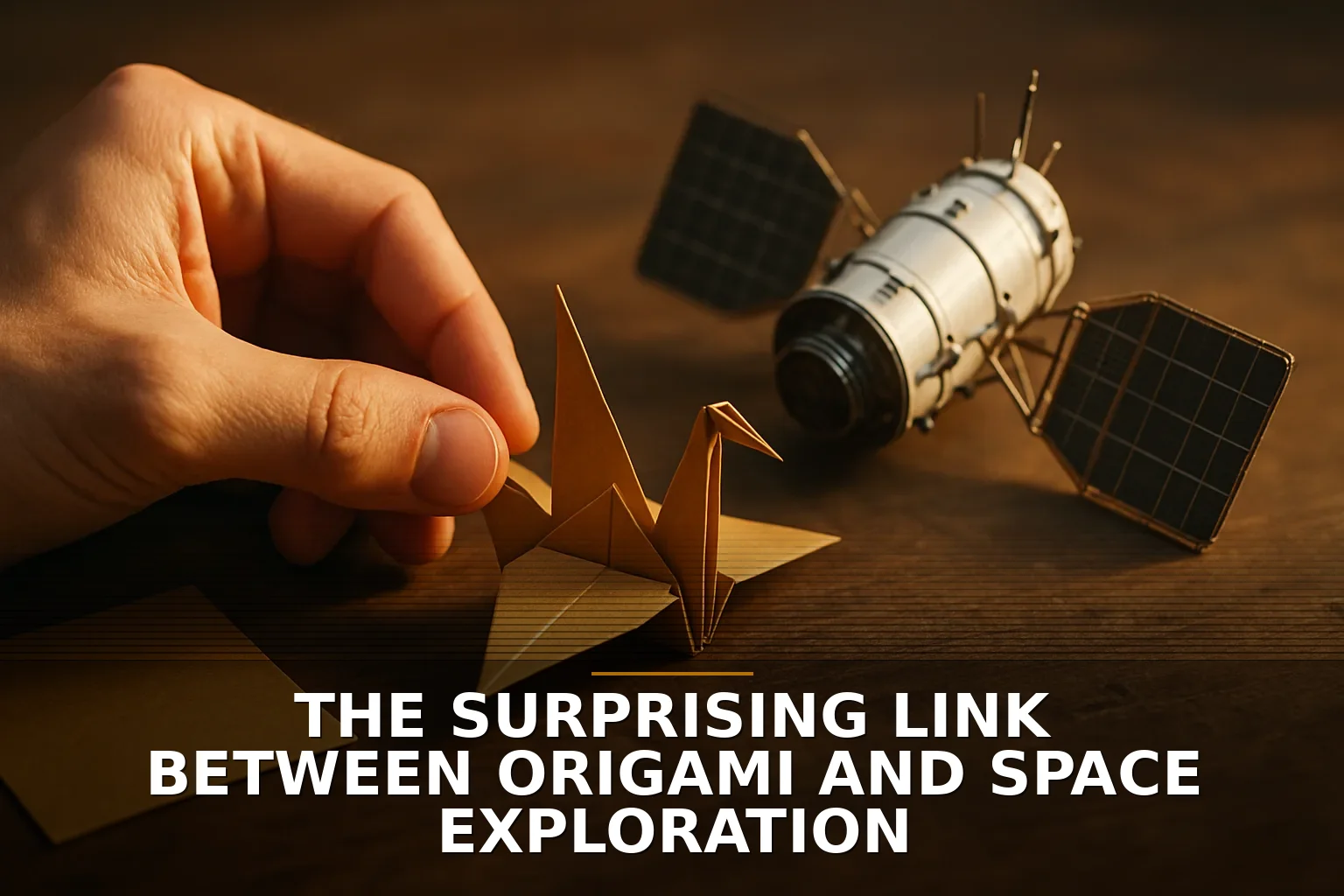
You might think of origami as something your bored cousin does at family gatherings, but here's a twist: origami is shaping the future of space exploration. Yeah, you heard that right. The ancient art of paper folding, with its delicate cranes and intricate flowers, might seem worlds away from high-tech NASA labs, but they're more connected than you’d imagine.
For decades, spacecraft design has followed a straightforward path: bigger and more complex. But as we venture further into the cosmos, it turns out the origami-inspired approach offers a smarter, more efficient way forward. This isn't just a fun factoid to impress at parties; it's a revolution in how we think about deploying technology beyond Earth.
Let's start with one of the most daunting challenges in space engineering: launching large structures into orbit. Traditional methods require spacecraft to be compact enough to fit into a rocket, then unfold once in space. Simple enough, right? Well, not exactly. Unfolding massive solar panels the size of tennis courts isn't like setting up a camping tent; it's more like trying to unfold a life-sized replica of the Eiffel Tower out of your backpack without breaking it.
Enter origami. Researchers are borrowing techniques from this ancient art to design structures that can be folded into small, intricate packages for launch and then deployed in space with minimal risk of damage. Take NASA's Starshade project, which aims to block starlight and allow telescopes to capture images of distant planets. It uses an origami-inspired design to unfold a 34-meter structure from a compact package (NASA — https://www.nasa.gov).
But why origami? Because it's a masterclass in efficient packing and unfolding. The same principles that let you fold a paper crane also allow engineers to design solar arrays and antennas that deploy seamlessly in zero gravity. It's not just about saving space; it's about creating structures that are both strong and lightweight. When you're thousands of miles from Earth's gravitational pull, every gram counts.
And origami's influence isn't stopping at space. On Earth, it's playing a role in industries that demand innovation and efficiency. Need an example? How Ancient Myths Are Quietly Guiding Today's Tech Innovations explores how seemingly unrelated disciplines are driving tech forward.
So, what's the broader implication here? It's a reminder that innovation often comes from the least expected places. Not every breakthrough is born in a high-tech lab; sometimes, it emerges from the folds of a simple piece of paper. This isn't just about space exploration—it's a testament to the power of cross-disciplinary thinking.
In a world obsessed with technological prowess, it's fascinating to see how an art form that's centuries old is quietly reshaping the future. Almost like The Hidden Role of Boredom in Inspiring Scientific Breakthroughs, where simple, overlooked elements spark genius.
So next time you see someone fiddling with a piece of paper, remember: they might just be crafting the blueprint for humanity's next giant leap.


Be the first to share your thoughts.