
Airtable vs Custom Software: The Real Cost for a Small Business
**Airtable usually costs $240 to $5,400+ per year, while custom software typically starts around $10,000 and often lands between $15,000 and $60,000 for a small business.** This guide breaks down what drives the number, where cheap tools get expensive, and which ongoing costs buyers forget.
Shared inbox or customer portal: which stops status-call busywork?
Choose a customer portal if routine status checks are driving the noise; choose a shared inbox if the real problem is internal reply chaos. This guide helps business owners decide which one actually cuts busywork.

Local Developer vs Marketing Agency: Which NW Arkansas Firms Should Hire?
**Hire a developer for website and technical problems; hire a marketing agency for lead generation and campaigns.** This comparison helps NW Arkansas and Southwest Missouri business owners choose the right kind of help without paying for the wrong thing.
Get posts like these in your inbox
Join the early readers of Thought Box. No spam, unsubscribe anytime.

How Much Does It Cost to Hire a Web Developer for a Small Business?
**Most small businesses pay about $500 to $3,000 for a basic website, $2,000 to $10,000 for a solid business site, and $10,000+ for custom work.** This guide breaks down what drives web developer pricing, where cheap gets expensive, and the ongoing costs owners forget.
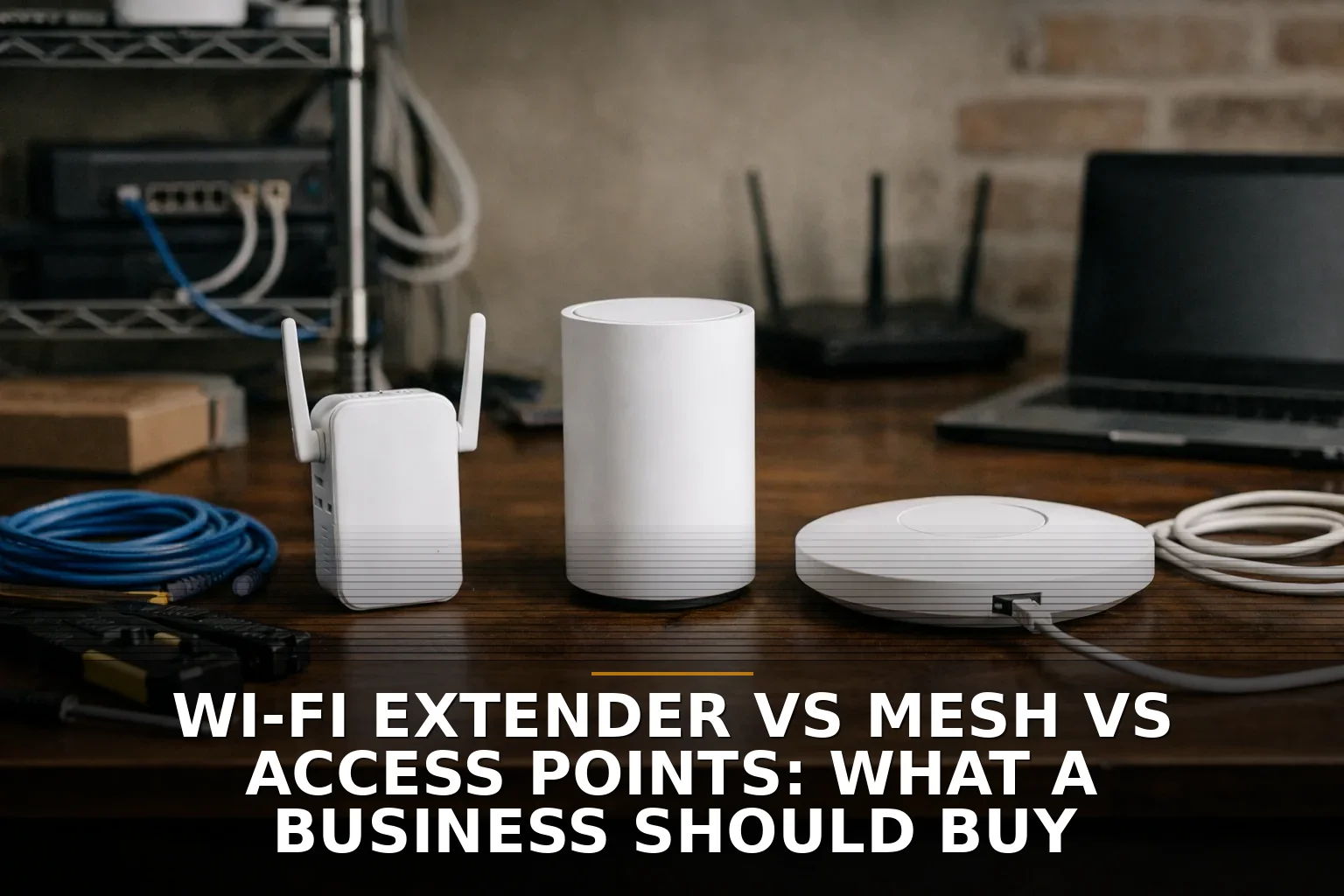
Wi-Fi Extender vs Mesh vs Access Points: What a Business Should Buy
**Access points are the best buy for most businesses if you can run Ethernet; mesh is the practical fallback, and extenders are only for small dead zones.** This comparison breaks down cost, fit, and trade-offs so business owners can choose the right Wi-Fi fix.

What Small Businesses Really Pay for a Website Project in 2026
A small business website in 2026 usually costs $1,500 to $25,000+, with most local businesses landing around $3,000 to $12,000. This breakdown covers what drives the price, where cheap websites get expensive, and the ongoing costs owners forget.
Get posts like these in your inbox
Join the early readers of Thought Box. No spam, unsubscribe anytime.
Website Add-Ons or Custom Software: What Should You Pay For First?
Pay for the add-on first if the feature is standard, isolated, and low-risk. Pay for custom software first when the workflow is unique, touches multiple systems, or is too important to run on a pile of plugins.

How to Fix Dead Wi-Fi Zones in a Shop, Office, or Metal Building
The fix for dead Wi-Fi zones is usually not a stronger router. Business owners get better results by using properly placed, wired access points, testing the building layout, and treating Wi-Fi like infrastructure instead of a gadget.

When a Springfield Service Business Should Replace Spreadsheets With Software
Replace spreadsheets with software when they stop being a simple tool and start running your service business. For Springfield owners, the real trigger is missed jobs, late invoices, version chaos, and workflow complexity—not company size.