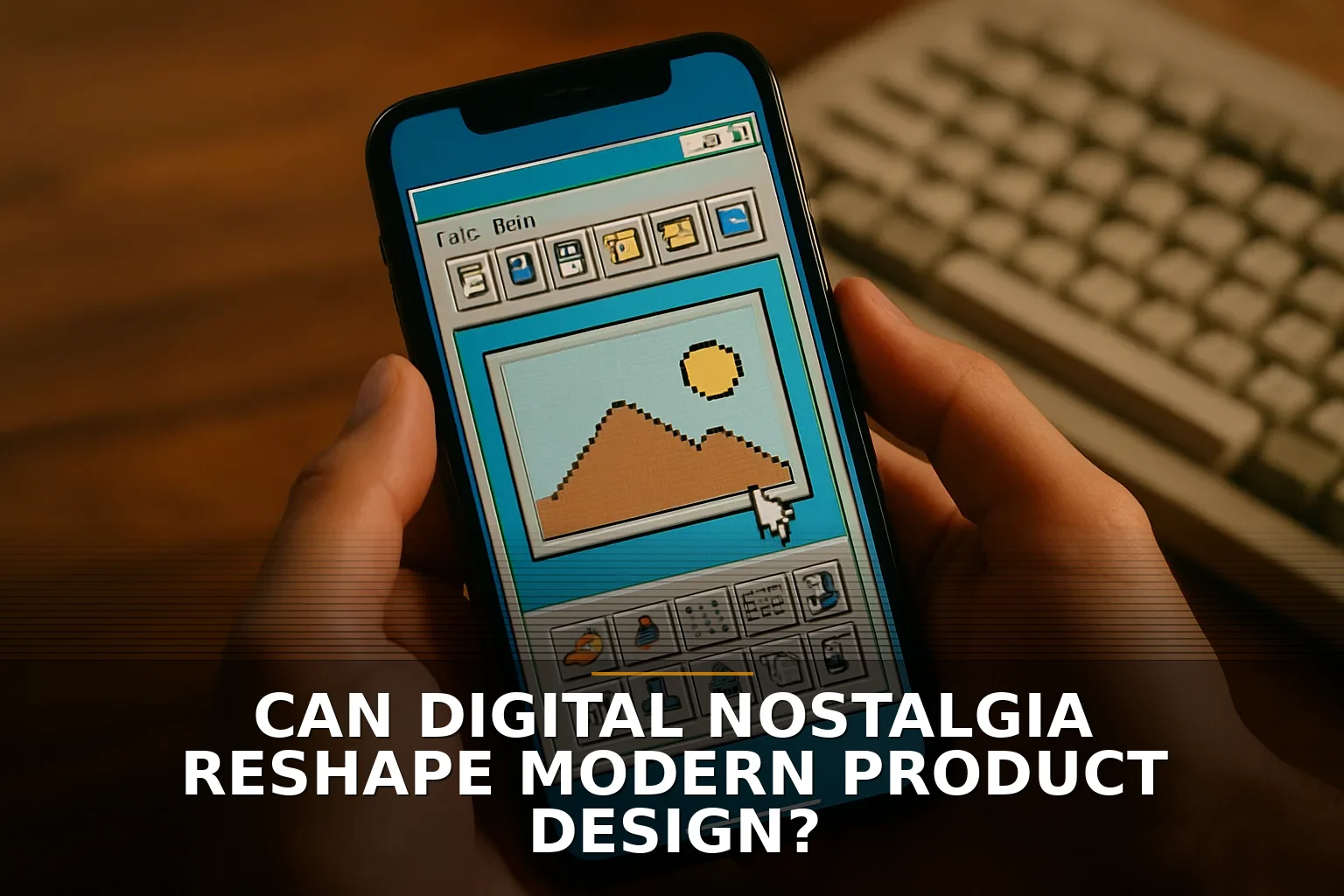
Imagine firing up a brand-new app, only to be greeted by a pixelated interface straight out of the 1990s. At first, you'd think, "Who approved this throwback?" But here's the kicker — it's intentional, and it's working. The trend known as digital nostalgia is making waves in modern product design, suggesting that the old-school look isn't just a gimmick; it's a lucrative strategy.
Conventional wisdom says innovation is all about newness. Companies chase the cutting-edge, eager to design with the latest tech and aesthetics. But some of the most successful products today are thriving on a different philosophy: looking backward while moving forward. Nostalgia taps into our emotions, and that, my friends, is a goldmine.
A prime example is the resurgence of vinyl records. Despite all the technological advancements in music streaming, vinyl sales hit a 30-year high in 2021. It's not just about sound quality; it's about the experience, the tactile feel, the connection to a time when music was consumed differently (Source: RIAA — https://www.riaa.com). And digital products are catching on.
Consider the explosion of apps mimicking old interfaces, like photo editors that replicate the disposable camera look. These aren't technical marvels by today's standards, but they succeed because they evoke an emotional response. It's a bit like how origami inspires space exploration — seemingly unrelated, but one informs and enriches the other.
Nostalgia doesn't just pull on heartstrings; it builds communities. Remember Pokémon Go? It wasn't just a game; it was a global phenomenon because it married cutting-edge AR with nostalgic Pokémon characters (Source: Bloomberg — https://www.bloomberg.com). The magic was in blending the past with the present.
So why isn't every product jumping on the nostalgia train? Critics argue it's a temporary gimmick, unsustainable in the long run. But what if this isn't mere novelty but a new lens on innovation? By leveraging nostalgia, designers are not just looking for repeat sales but lifelong customers who feel emotionally invested. It's a powerful strategy that businesses should consider when developing their next big idea.
This strategy is not without its limits, of course. The key is authenticity. Users will spot a phony attempt a mile away. Genuine nostalgia, like a well-played vinyl, sounds sweet and resonates deeper (Source: The Atlantic — https://www.theatlantic.com).
As digital nostalgia continues to shape products, it's worth considering how far this trend can go. Can nostalgia truly reshape the future of design, or will it eventually become just another checkbox in the product strategy playbook? More importantly, what happens when the nostalgia runs out — do we circle back to the future, or is there a chance we're already living in the past?
What this means for your business. Familiar interface patterns reduce the training cost of any new tool you give your team. A web app that looks and feels like a tool your staff already knows how to use is one they'll actually use. A radically novel interface — even if technically better — is one that gets quietly avoided.
The lesson for small business software: copy what works. The dashboard everyone already knows how to read, the form layout already familiar from a dozen other tools, the navigation patterns customers expect — using those isn't lazy design. It's compounding the training your users have already done elsewhere. We build for local businesses with that bias toward familiarity, which is part of why our tools get adopted instead of ignored.


Be the first to share your thoughts.