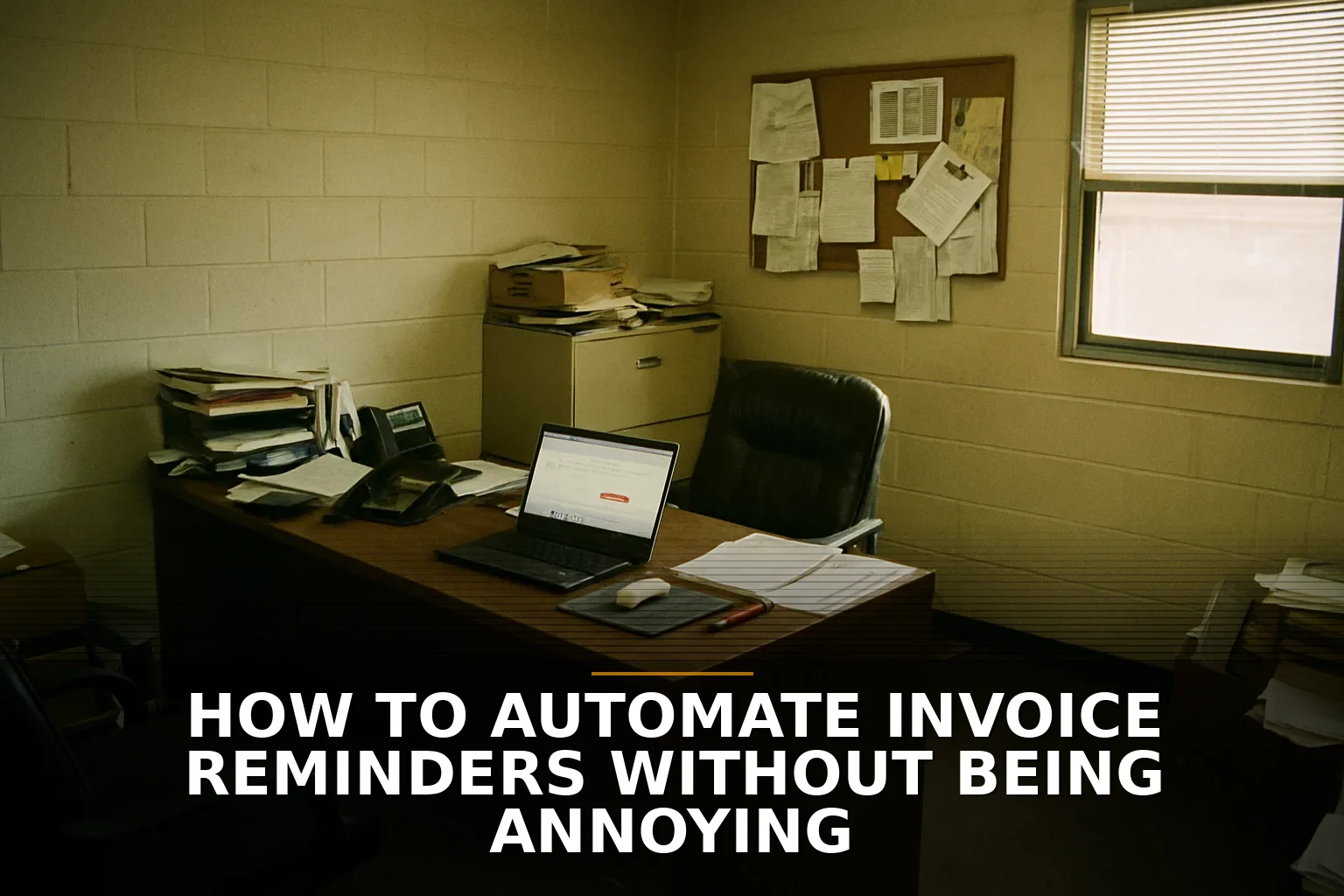
Picture this: a local construction company in Rogers, AR is struggling with cash flow. Their biggest issue? Overdue invoices. With $84,000 in pending payments, they're feeling the pinch. They needed a solution that wouldn't alienate their clients—after all, they're building homes, not just sending bills.
The Situation
The business owner, let's call him Joe, approached me after realizing that 39% of his invoices were paid late, often because customers simply forgot their due dates. Joe's team was small, just five people, and manually chasing payments was eating into their time better spent on client projects. They needed to automate invoice reminders to improve cash flow without annoying their clients.
The Complication
Joe was wary of automation. He’d heard horror stories of businesses losing customers because their reminders came off as aggressive or robotic. Plus, Joe’s customers were a diverse bunch, from tech-savvy millennials to traditionalists who barely check their email. It was clear that a one-size-fits-all solution would not work.
The Resolution
We started by mapping out Joe's customer types and their communication preferences. For tech-savvy clients, we set up email reminders optimized to go out on Tuesdays, taking advantage of the 20% higher open rate noted by Mailchimp. For the less digitally inclined, we integrated SMS reminders, tapping into their impressive 98% open rate. Each message was crafted to be friendly yet firm, borrowing from FreshBooks' advice to increase the likelihood of payment by 15%.
Next, I implemented a simple machine learning algorithm to analyze historical data. This AI-driven tool helped us predict the best time to send reminders, ensuring they hit just the right note—not too soon, not too late.
Finally, we kept the reminders personal. Each message addressed the customer by name and referenced their specific project. This strategy was crucial in maintaining the personal touch Joe feared losing.
The Lesson
Automating invoice reminders is like renovating an old house. You need the right tools and a thoughtful approach. Done right, it’s about business efficiency software that respects your client relationships while ensuring you get paid. Joe's company saw a 30% reduction in late payments, aligning with findings from Xero.
For small business owners, whether in custom software development or construction, the takeaway is clear: automate invoicing but personalize the process. Understand your client base and tailor your approach. Automation doesn't mean losing the human touch; it means freeing your team for what really matters, as discussed in my article on automation benefits.
So, as you sip your coffee and think about your own overdue invoices, ask yourself: Are you ready to embrace the tools that keep your business running smoothly without ruffling feathers? What would a 30% reduction in late payments mean for your business?
Be the first to share your thoughts.