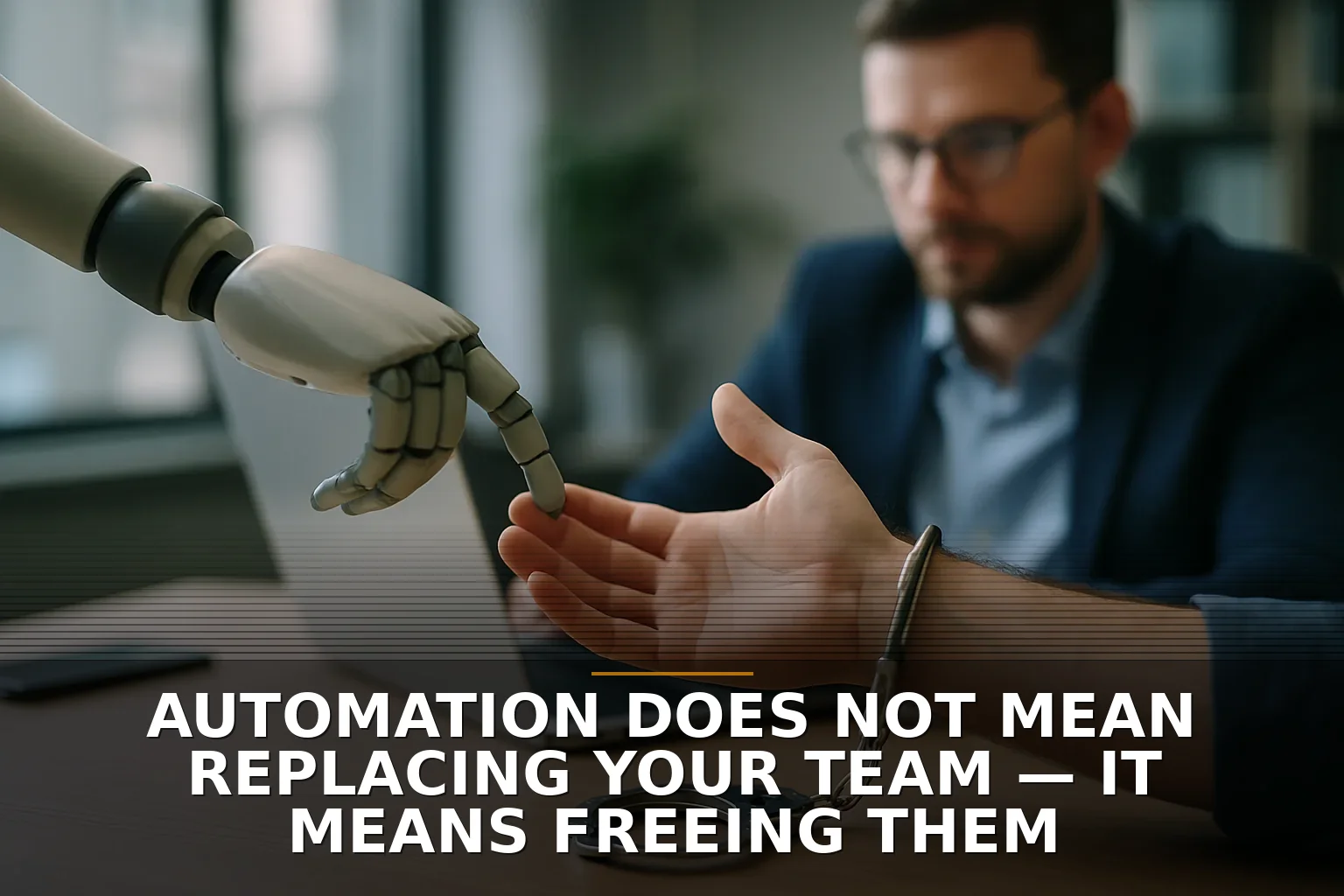
Automation is like a dishwasher in a busy restaurant kitchen — it's not there to replace the chefs but to free them up from scrubbing pots so they can focus on creating great dishes. This notion came to life in a recent project I worked on for a medium-sized logistics company. Let's dive into the details.
The Situation
The logistics company had a problem. With a team of 15 people managing operations, they were knee-deep in manual data entry and repetitive tasks. These tasks included updating spreadsheets, tracking shipments, and generating invoices. It wasn't just about the hours lost; the team was frustrated and morale was slipping. They needed to boost productivity and job satisfaction, but the management feared that automation might mean job cuts.
The Complication
The management was caught in a dilemma. They knew automation could help, but they feared it would lead to layoffs and create tension among employees. Additionally, the existing systems were outdated, and integrating a new solution seemed daunting. The initial reaction was hesitant, as they feared a significant investment might be required, with no guarantee of success.
The Resolution
After a few discussions over coffee (and a lot of listening), I proposed a solution centered around workflow automation that's more like a renovation than a demolition. We identified the key repetitive tasks that could be automated easily, like data entry and automate invoicing. By creating a custom software solution, the team could eliminate these manual tasks.
The initial implementation took about $15,000 and two months to roll out. We focused on incremental changes rather than a complete overhaul. The automation software handled shipments updates and invoicing, allowing the team to focus on customer service and strategic planning.
In the first year alone, the company saw a 30% increase in productivity. More importantly, the team was relieved. They could now dedicate time to more meaningful work, which in turn improved job satisfaction and business efficiency.
The Lesson
Automation doesn't mean replacing your team; it means freeing them to do what they do best. It's about turning a 6-hour workflow into a 20-minute process — and trust me, the real-world case proves it.
For any small business owner, this experience underlines the importance of viewing automation as a tool for augmentation rather than replacement. It's crucial to identify which parts of your business can be automated and which should remain human-driven. If you're unsure where to start, I've written about the tasks every business should automate first.
Finally, remember that while the initial investment can seem steep, the long-term savings in time and morale are often well worth it. If you're evaluating tech purchases or custom software, don't shy away from asking the right questions.
In short, see automation as a partner for your team, not a replacement. Start small, think strategically, and you’ll find the balance that keeps your business and your team thriving.



Be the first to share your thoughts.