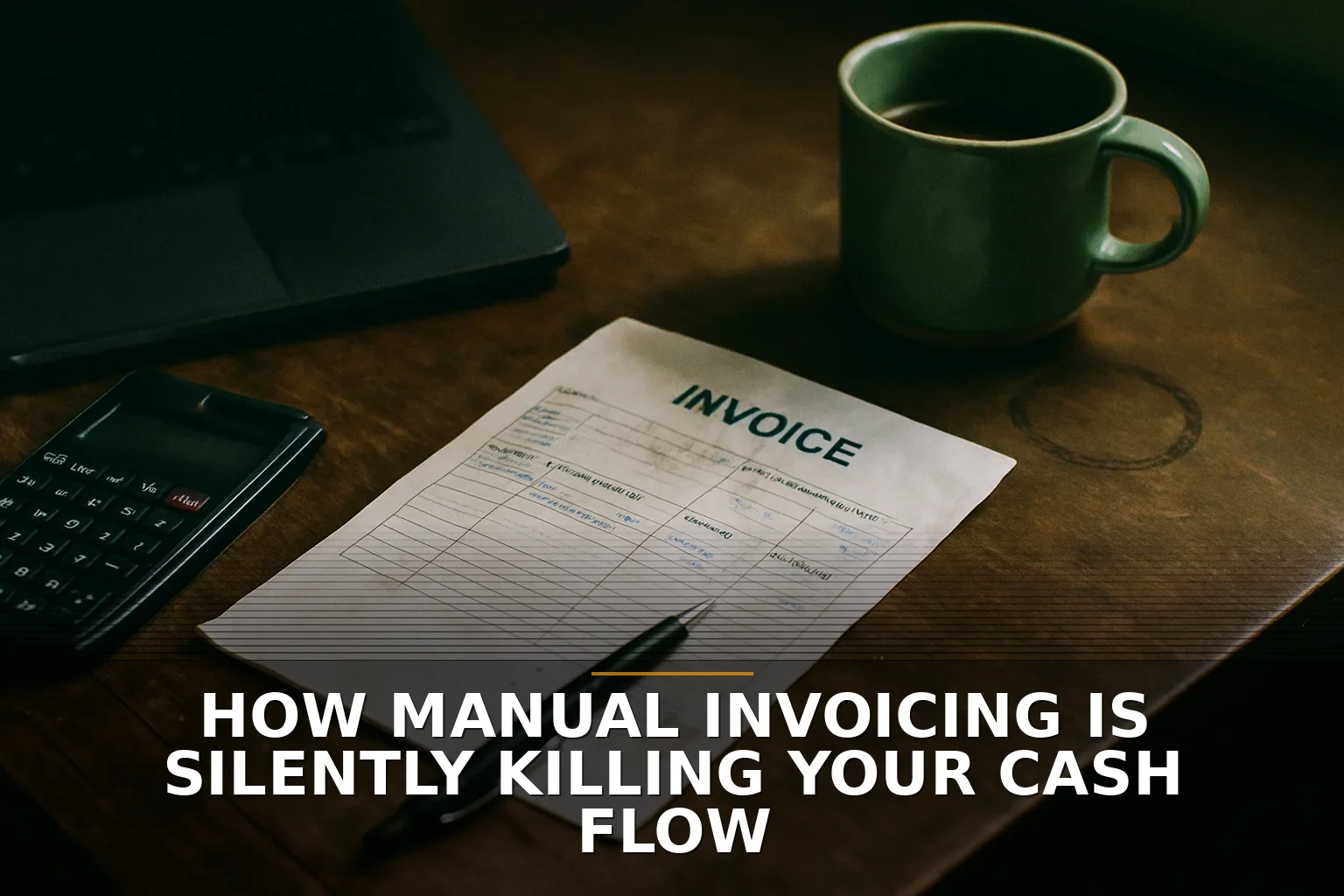
Imagine running a restaurant where every order is taken manually, hand-written on a piece of paper, and then slipped under the door of the kitchen. Sure, it's charming and old-school, but it’s also incredibly inefficient. This is essentially what you're doing with manual invoicing—and it's quietly draining your cash flow.
According to research, businesses that use manual invoicing spend up to 15 hours a week on invoicing tasks. That's nearly two workdays lost to a process that could be 80% faster with automation. Imagine what else you could achieve with those hours. Perhaps expanding your business, improving customer service, or just taking a well-deserved break.
Manual invoicing is not just a time sink—it’s also a source of frequent errors. Levvel Research found that manual invoices have error rates as high as 8%, leading to payment delays and disputes. When you send an incorrect invoice, it’s like serving the wrong dish to a customer. You waste time fixing it, further delaying payments.
Late payments are another crippling side effect. Approximately 49% of invoices are paid late, and manual invoicing can be a significant factor. Think of it as a leaky bucket; you’re constantly adding sales, but the money drips out slowly. Automating your invoicing process could reduce your Days Sales Outstanding (DSO) by 10 days, effectively plugging those leaks and speeding up your cash flow.
The costs add up too. Processing a single invoice manually costs between $12 and $30, compared to $3 to $6 for automated invoices. Multiply that by the number of invoices your business handles monthly, and you’ll see the savings automation could bring you.
So, why do some businesses stick with manual invoicing? It’s often about perceived control. Some business owners feel more in touch with their operations when they can see and touch every invoice. But in reality, automation can enhance accuracy and gives you even more control by freeing up resources to focus on what truly matters.
Automating your invoicing isn't just about cutting costs—it's about securing your business's future. A U.S. Bank study found that 82% of business failures are due to poor cash flow management. By automating invoicing, you’re not just saving money on processing costs; you’re safeguarding your business against potential failure.
Transitioning to automated invoicing may seem daunting, but the long-term benefits are worth the initial hurdle. For a practical step forward, consider how business automation can transform your invoicing process and reduce your risks. For businesses in Fayetteville, AR, local custom solutions are often available to ease this transition.
Now, imagine your business a year from now. Would your future self thank you for sticking with manual invoices, or for taking the leap into automation? If you’re still handwriting orders in a digital world, it might be time to rethink your strategy.
Be the first to share your thoughts.