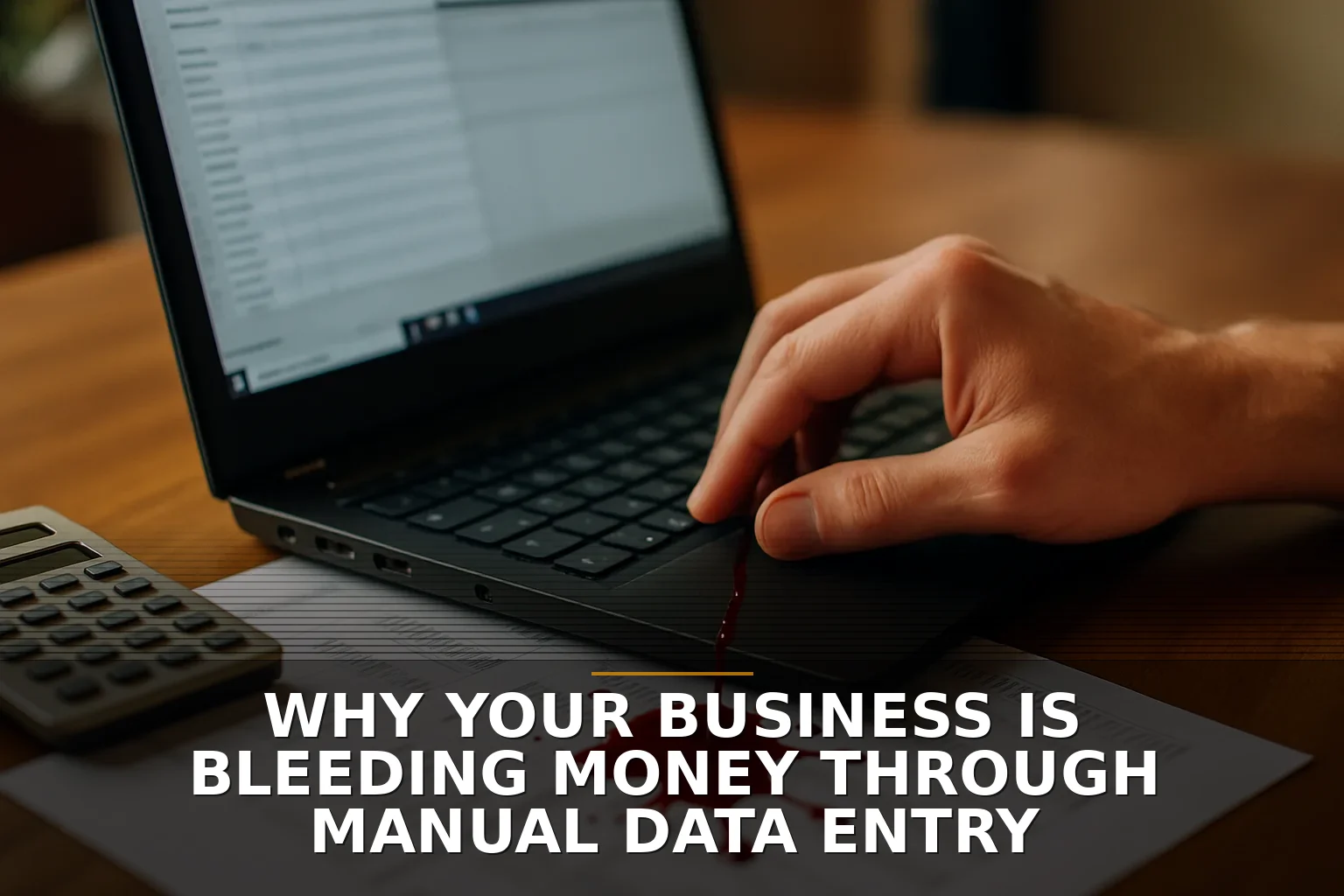
Picture this: You're running a small but growing e-commerce business. Orders are coming in, and your team is hustling. But every time you glance at the books, your profit margins seem to be shrinking. Here's where the problem often lies: manual data entry.
The Situation
A client of mine, let's call them 'SoleCrafters', was experiencing exactly this. They were a bespoke shoe manufacturer in Arkansas, and business had picked up thanks to a viral marketing campaign. Their challenge? Processing all their orders involved hours of manual data entry—each day. The team of five was drowning in spreadsheets, and the CEO was worried about the mounting labor costs and shrinking bottom line.
The Complication
You might think, "Why not just hire more people?" But here’s the kicker: spreadsheets are error-prone. Harvard Business Review cites that errors can siphon off 10-30% of revenue annually. For SoleCrafters, that meant lost sales and customer dissatisfaction every time a mistake slipped through. Their manual processes also consumed an average of 10 hours a week in data entry per employee, which, according to The Data Warehousing Institute, was costing them around $16 per hour—not counting the cost of fixing errors.
The CEO was at a crossroads. Should they absorb the skyrocketing costs and risks, or find a new way to handle data?
The Resolution
I stepped in to help automate their data entry process. We started by building a custom CRM for small business needs, designed to synchronize and update data across all platforms automatically. This system replaced their need for spreadsheets entirely, minimizing the chance for errors and drastically cutting down manual workload.
The results? SoleCrafters saw a 30-50% increase in productivity, akin to results reported by McKinsey & Company. Their team, once bogged down by repetitive tasks, could now focus on customer service and product development, areas that truly needed their expertise.
The Lesson
The real cost of manual data entry isn't just about dollars spent on wages; it's about opportunity lost. By not automating, you're tying your team to tasks that a machine can do faster and more accurately. The initial investment in automation may seem steep, but as PwC points out, the long-term savings and efficiency gains far outweigh it.
For any business owner on the fence about investing in automation, consider the money you're leaving on the table due to errors and inefficiencies. Replacing spreadsheets with software isn't just a luxury—it's a necessity to stay competitive.
But it's not just about the numbers. Automating tedious tasks empowers your team, allowing them to tackle strategic objectives that drive your business forward.
The Question
So, next time you're at your desk, ask yourself: What's the hidden cost of keeping things manual, and how much longer can I afford it?
For more insights, check out 4 Simple Questions to Ask Before Investing in Custom Software and explore our Business Automation services to discover how you can start saving today.
Be the first to share your thoughts.