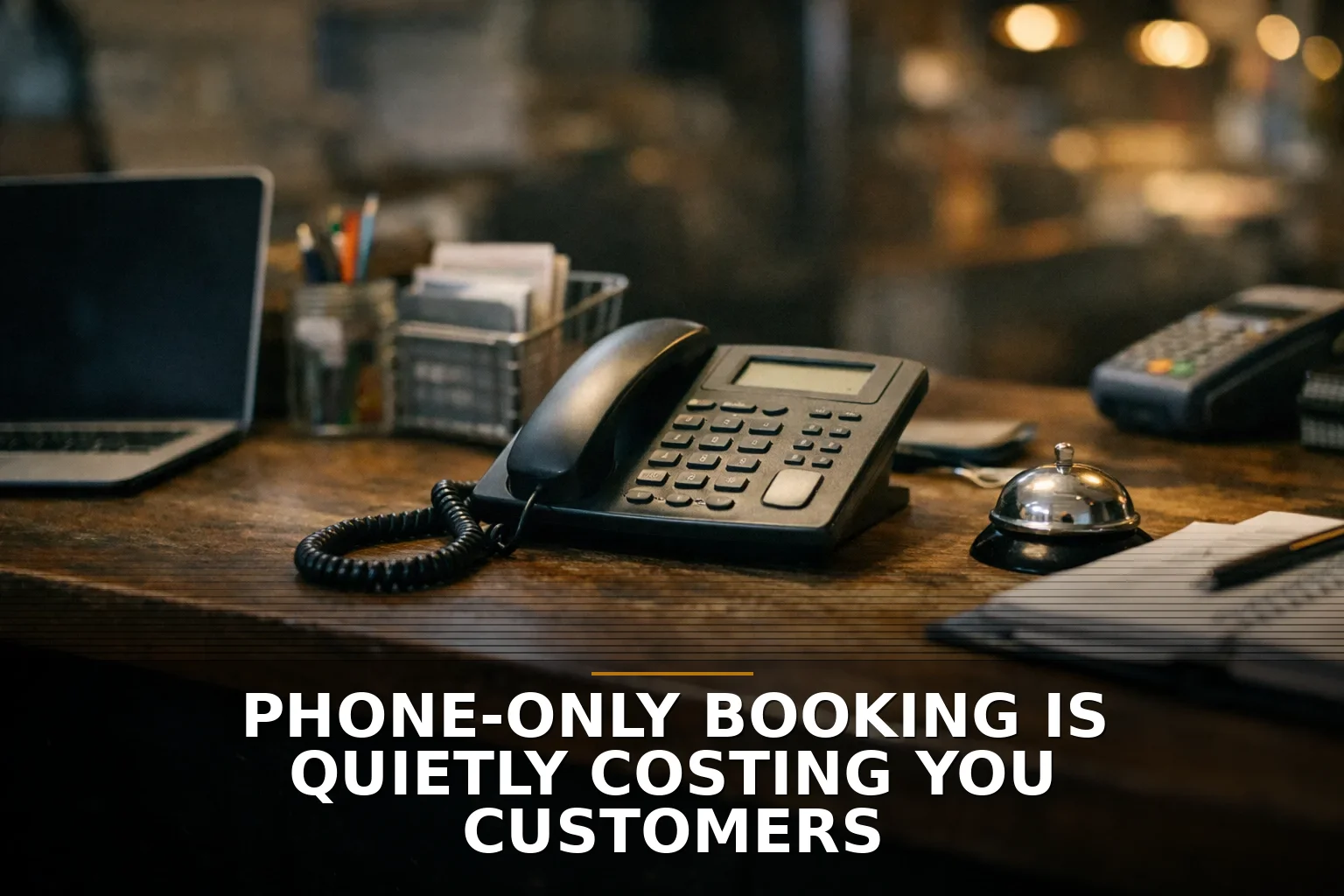
Ever tried booking a table at your favorite restaurant, only to get stuck in a game of phone tag? Or maybe you've been on the other side, juggling calls while trying to manage your business. If your booking system is still relying on the phone, it might be time to rethink your strategy. You're not just missing calls; you're losing customers.
1. Understand the Cost of Missed Opportunities. According to GetApp, 67% of consumers prefer to book appointments online rather than over the phone. If your system is phone-only, you're turning away a significant chunk of potential customers who prioritize convenience. This isn't just about missed calls; it's about missed revenue, especially since research by Yocale indicates that businesses with online booking systems see a 26% increase in revenue.
2. Cater to After-Hours Customers. A study by Software Advice found that 35% of customers would prefer to book appointments during non-business hours. If you're only taking bookings by phone, you're not accessible 24/7. An online system allows patrons to make reservations at their leisure, which can improve both customer satisfaction and your bottom line.
3. Improve Efficiency and Data Collection. Online booking systems lighten the load on your staff by reducing time spent on phone calls. Plus, they offer better data collection and customer insights, which can be used for personalized marketing and service offerings, according to Forrester Research. By moving away from phone bookings, you're freeing up your team to focus on what's really important: enhancing the customer experience.
4. Address Data Privacy Concerns. Some business owners worry about data privacy and security with online systems. While these are valid concerns, modern booking platforms often come equipped with robust security measures. It’s also an opportunity to educate your customers about how their data is being protected, which can build trust.
5. Prepare for the Transition. Moving from a phone-based system to an online booking platform does involve some upfront work. You'll need to consider costs, train your team, and integrate the new system with your existing processes. However, these are manageable hurdles, and the long-term benefits significantly outweigh the short-term challenges. Small-town businesses have embraced technology upgrades with great success, showing that size shouldn't limit your tech ambitions.
6. Balance Technology with Personal Touch. While an online booking system offers convenience, some businesses argue that phone interactions build stronger customer relationships. However, the two aren't mutually exclusive. For example, you can use the online system for initial bookings and follow up with a personal call to confirm details or extend a personalized offer, blending the best of both worlds.
7. Evaluate the ROI. Before diving in, consider whether custom software might align better with your unique needs than off-the-shelf solutions. Custom options can offer tailored functionality that supports your specific business processes and goals. Custom software for small businesses can often pay for itself quickly by streamlining operations and enhancing customer experiences.
In conclusion, if your booking system is still just a phone line, it's time to upgrade. You'll gain happier customers and increased revenue, and your staff will thank you for freeing them up to do more meaningful work. So, take a hard look at what's holding you back and consider the leap to online. If you're in the NW Arkansas area, there are local resources that can help make this transition smoother.
Be the first to share your thoughts.