Picture this: You're halfway through building a custom software solution for your business, only to discover that the end-users find it cumbersome and not meeting their needs. Sound like a nightmare? It is. And guess what? It's avoidable.
Let's get straight to the point. Listen to your end-users early. This simple step can save you from the costly, frustrating situation of having to rebuild your software from scratch. According to the Standish Group, lack of user input is a top reason for project failures, accounting for 13% of all failures. That's not just a statistic; it's a reality many businesses face.
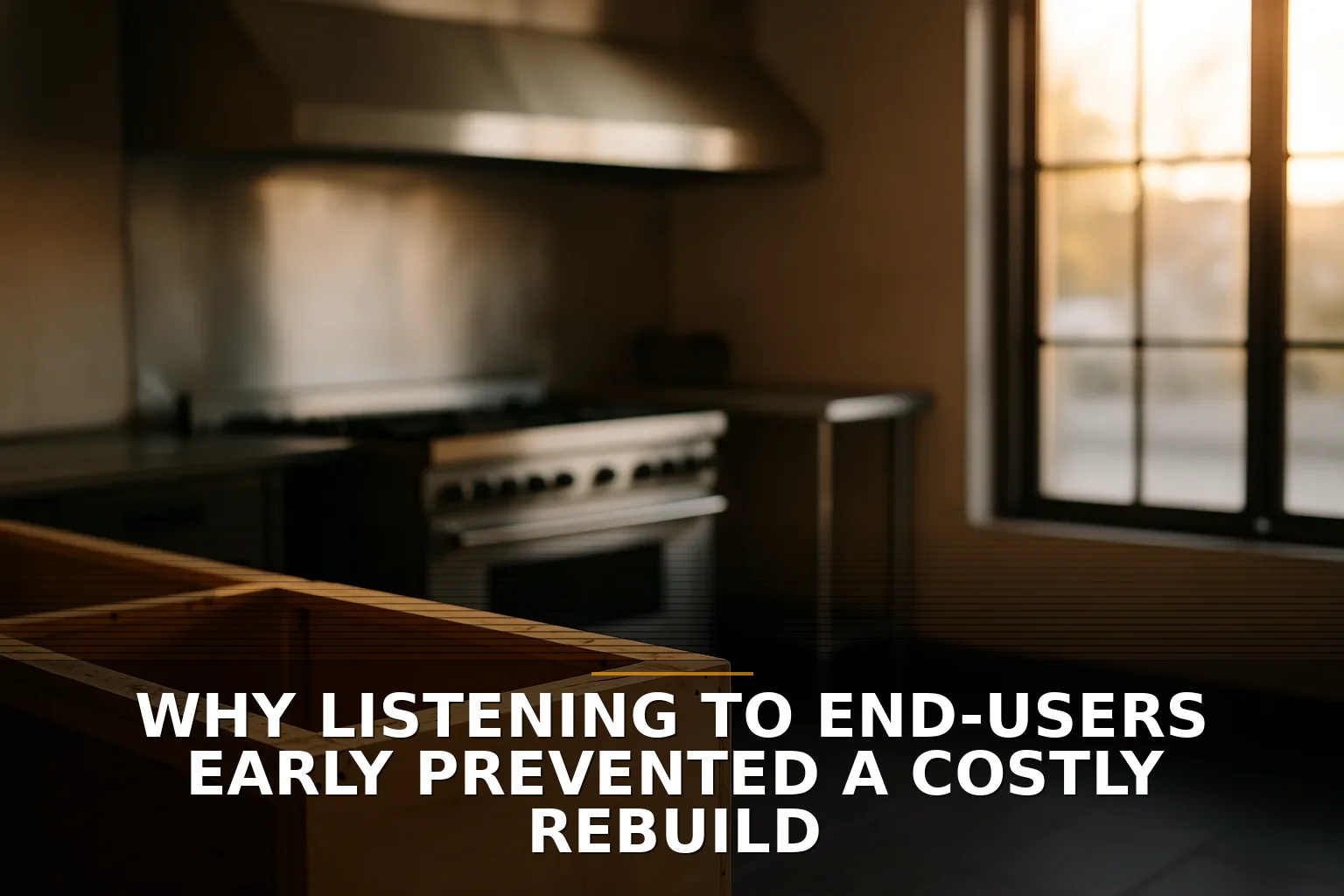
Imagine you're constructing a new restaurant. Would you build the entire place without consulting the chef, just to find out later that the kitchen layout is all wrong for cooking? Of course not. Yet, in the world of software, this happens all the time. Developers get halfway through a project only to realize they’ve ignored the people who will actually use the software.
Why does this matter so much? Let’s look at some numbers. A report by McKinsey states that projects engaging end-users from the start are 30% more likely to succeed. And IBM tells us that fixing an error after development can be up to 100 times more expensive than during the design phase. These aren't just hypothetical scenarios. They’re grounded in cold, hard facts.
So what can you do? Start by involving end-users from day one. Conduct interviews, surveys, and usability tests early in the process. Don’t wait until development is nearly done to get feedback. An early 15-minute meeting can save you weeks of development time, as I’ve written about here.
Some might argue that too much user feedback can lead to feature creep. This is a valid concern, but it’s about balance. Focus on core functionalities that truly enhance user experience. As Jakob Nielsen, a usability expert, points out, early user involvement helps catch usability issues before they become costly mistakes.
The benefits are clear. Projects with high user involvement are twice as likely to be completed on time and within budget, according to the Project Management Institute. And as Forrester Research notes, improving user experience can boost conversion rates by up to 400%.
Ultimately, it’s about avoiding the trap of expensive reworks by incorporating user input early and often. It’s not just about building software; it’s about building the right software that people will actually want to use. For more insights on the cost-effective power of custom software, check out my breakdown here.
When you put the end-users at the center of your process from the start, you’re not just building software; you’re laying down a foundation that aligns with real-world needs. Avoid the nightmare of a rebuild. Listen early, and build wisely.
Be the first to share your thoughts.